Southern Class Carpet & Upholstery Cleaning / Our Process

Our Upholstery Cleaning Process

A thoughtful, fabric-first approach to cleaner, fresher furniture.

From the first fabric inspection to the final walkthrough, we tailor our upholstery cleaning process to the material, condition, and cleaning needs of each piece. Learn how we care for sofas, sectionals, chairs, and other upholstered furnishings throughout Raleigh and surrounding Wake County communities.

Fabric-specific careMethod-based cleaningFinal quality check
Professional upholstery cleaning service for home furniture in Raleigh, North Carolina
01—06From inspection to finishing
Why the process matters

Every Fabric Deserves the Right Approach.

Upholstered furniture collects everyday dust, body oils, spills, pet hair, and soil in places that are difficult to reach during routine cleaning. Yet different fabrics respond differently to moisture, heat, agitation, and cleaning products.

That's why a responsible process begins with identifying the material and evaluating the furniture rather than applying the same treatment to every item. We explain the six general stages below; the precise method and treatment sequence may vary with your upholstery.

Our method, step by step

What Happens During an Upholstery Cleaning Appointment?

Six practical stages help us evaluate the fabric, remove appropriate soils, and finish the job with attention to detail.

01
Assess

Pre-Inspection & Fabric Identification

We examine the furniture's fabric, construction, overall condition, wear areas, spots, and visible soiling. Where relevant, we check care instructions and consider colorfastness or other material concerns before selecting a cleaning approach.

This first step helps determine whether extraction, a low-moisture method, or another fabric-appropriate treatment is the better option. It also gives us a chance to discuss pre-existing wear, stains, and realistic expectations.
02
Prepare

Pre-Vacuuming & Dry Soil Removal

We remove loose dirt, dust, crumbs, pet hair, and other dry debris from accessible upholstery surfaces. Extra attention goes to cushions, seams, edges, and crevices where material often accumulates.

Removing dry particles before adding moisture helps minimize unnecessary residue and prepares the fabric for the cleaning stage.

03
Treat

Targeted Pre-Treatment & Gentle Agitation

We apply cleaning agents chosen for the upholstery and its condition, focusing on appropriate areas of buildup, body oils, and visible spots. On suitable materials, gentle agitation can help loosen soil so it can be removed more effectively.

The amount of solution, dwell time, and agitation are adjusted to the fabric. Sensitive textiles may require a gentler method or a different treatment altogether.

04
Clean

Fabric-Appropriate Deep Cleaning

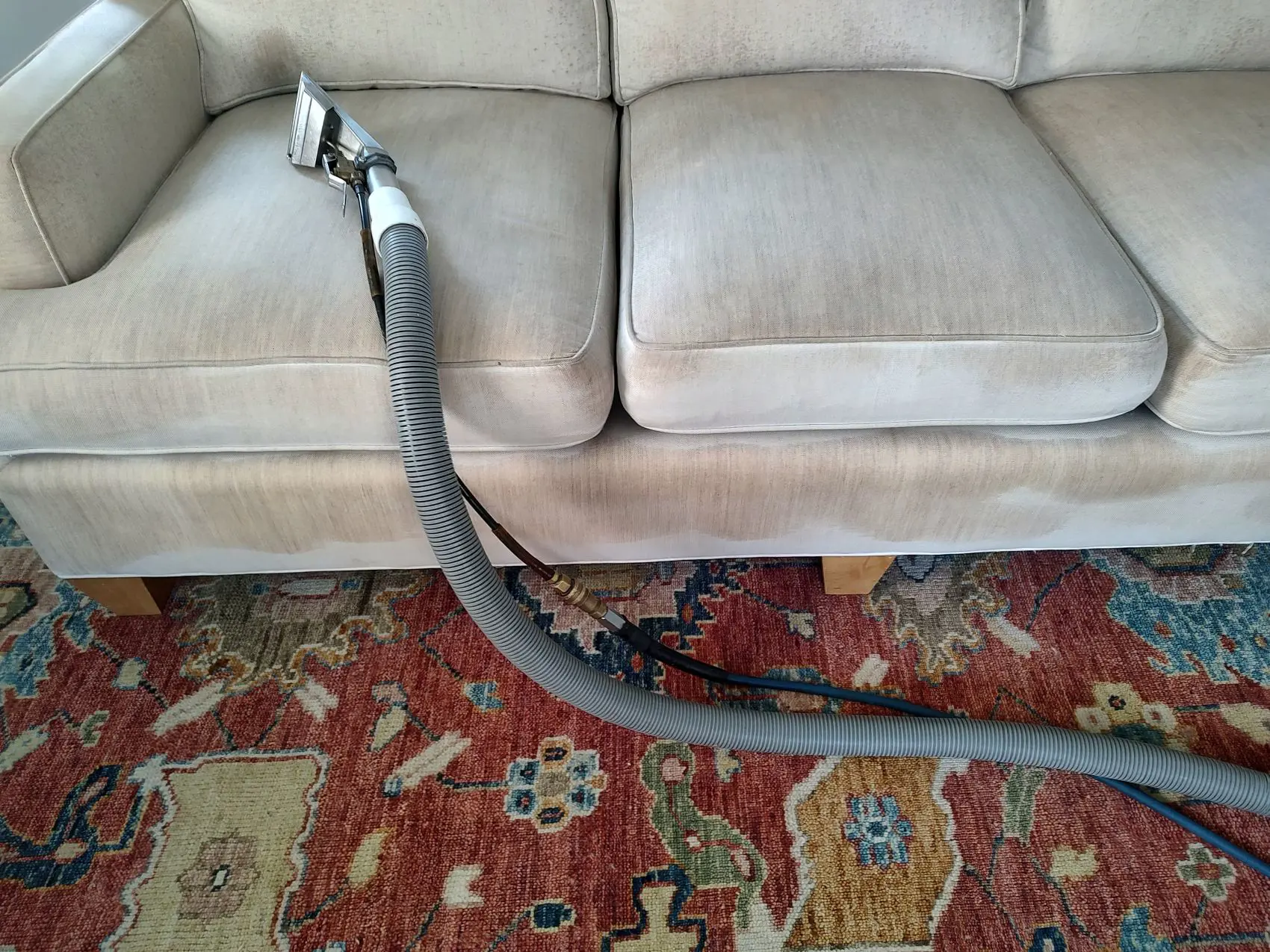
Depending on the material, we may use controlled hot-water extraction, low-moisture techniques, or another suitable cleaning method. The goal is to lift and remove embedded soil while controlling moisture and protecting the appearance and structure of the upholstery.

No single method is appropriate for every fabric. The inspection guides how this stage is carried out.

05
Refine

Spot Treatment & Residue Management

We revisit problem areas and evaluate whether additional fabric-safe spot treatment is appropriate. When the selected cleaning method calls for it, rinsing or extraction helps remove loosened soil and cleaning residue.

Stain removal depends on the cause, age, and fabric; permanent discoloration or dye changes may not be reversible. We focus on safe improvement rather than promising that every mark will disappear.

06
Finish

Drying Guidance, Grooming & Final Inspection

We finish by checking the cleaned areas, grooming applicable fabrics, and discussing the results. Air movement and ventilation may help support drying, depending on the cleaning method, fabric thickness, and room conditions.

We also explain when the furniture should be ready for normal use and any aftercare considerations. Drying times vary, so we recommend waiting until the fabric is fully dry before regular use.

Upholstered furnishings that benefit from fabric-specific professional cleaning
Not a one-method-fits-all service

The Fabric Determines the Treatment.

A durable synthetic upholstery fabric may be suitable for a different treatment than a delicate natural-fiber blend, specialty textile, or older piece with compromised backing.

Our process prioritizes evaluating the material and selecting a suitable cleaning method, not using the most aggressive treatment. This helps reduce avoidable risks such as overwetting, texture changes, or dye movement.

Explore our upholstery cleaning services
Before and after the appointment

A Little Preparation Goes a Long Way.

These simple considerations help us focus on your furniture and help you get the most from the cleaning.

01 / Before

Make the Furniture Accessible

Clear small items, fragile decorations, and personal belongings from furniture and the immediate work area. Let us know about tight access or pieces that are difficult to move.

02 / Discuss

Point Out Problem Areas

Tell us about specific spills, pet-related spots, odors, earlier cleaning attempts, or concerns with fading and wear. This information helps us choose appropriate treatments.

03 / After

Allow Time for Drying

Drying depends on fabric, cleaning method, ventilation, and humidity. Avoid sitting on or covering damp upholstery, and follow the care guidance provided at your appointment.

Common questions

What Else Should You Know?

Helpful answers about what our upholstery cleaning process can—and cannot—do.

How long does upholstery cleaning take?

Timing depends on the number and size of pieces, fabric type, condition, and method selected. We can discuss a more realistic appointment window once we know what needs cleaning.

How soon can I use my furniture afterward?

Wait until the upholstery is fully dry and follow the specific guidance given for the fabric and cleaning method. Drying times can vary considerably with humidity, ventilation, material, and cleaning conditions.

Can every stain or odor be removed?

Not always. Some stains permanently alter fibers or dyes, and odors can originate from padding or materials beyond the surface fabric. We assess each concern and explain reasonable expectations.

Do you clean delicate or specialty upholstery?

Some specialty fabrics can be cleaned using carefully selected methods, but not all are candidates for the same treatment. We'll evaluate the material and discuss whether cleaning is appropriate.

Is professional cleaning a substitute for routine vacuuming?

No. Regular vacuuming and prompt attention to spills help limit buildup between appointments. Professional cleaning is an additional measure for fabric-appropriate soil removal and ongoing furniture care.

Ready to refresh your furniture?

Let's Talk About Your Upholstery.

Have a sofa, chair, sectional, or other upholstered piece that needs attention? Contact Southern Class Carpet & Upholstery Cleaning to discuss your furniture and request service in Raleigh and surrounding communities.